
Server
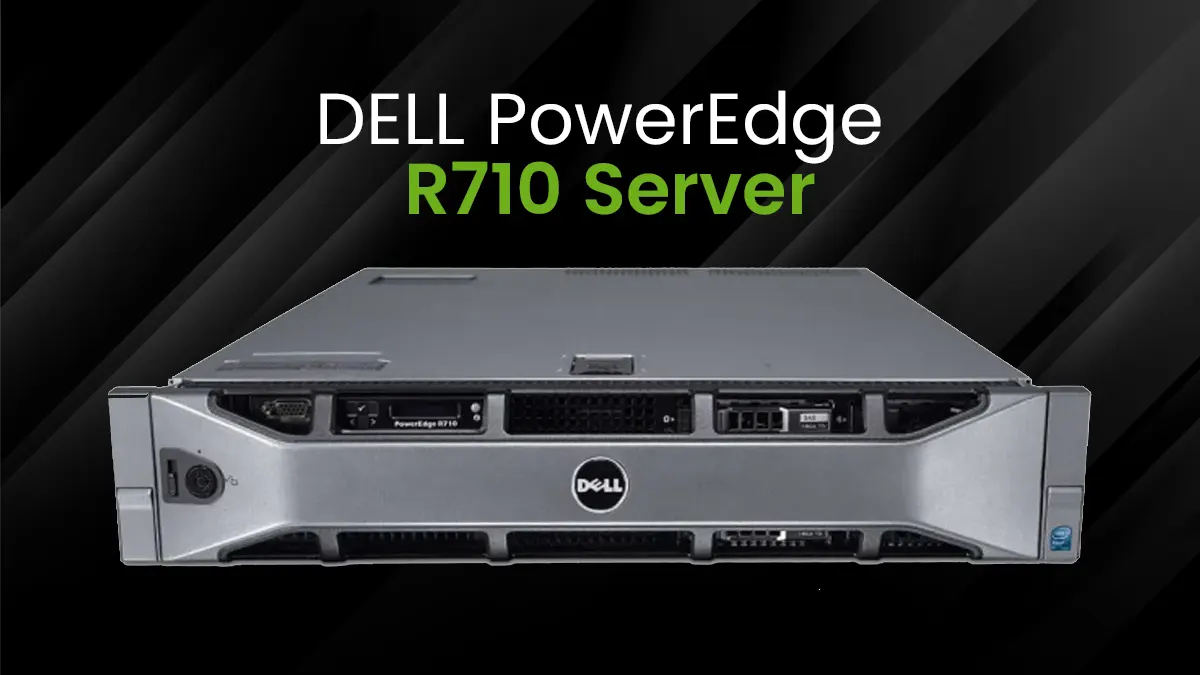
Dell PowerEdge R710 Server: The Reliable Workhorse for Pakistani Businesses
Sep
In many enterprise environments across Pakistan, stability matters more than anything else. The Dell PowerEdge R710 Server with SLA Support in Pakistan continues to hold its place as a trusted and dependable platform for organizations that require consistent performance for core business operations. Although it belongs to an earlier generation of enterprise servers, the Dell PowerEdge R710 remains widely deployed due to its durability, predictable performance, and cost efficiency.
From small IT setups to mid-sized data centers, the Dell PowerEdge R710 delivers a balanced mix of compute power, storage flexibility, and manageability—making it a practical choice for workloads that demand reliability over cutting-edge complexity.
Why Choose Dell PowerEdge R710 Server with SLA Support in Pakistan?
The Dell PowerEdge R710 is designed for organizations that prioritize operational stability, simplified infrastructure, and long-term usability.
Key advantages include:
- Dual Intel Xeon 5500 / 5600 series processors
- Strong virtualization foundation
- Flexible storage configurations
- Enterprise RAID controller support
- Integrated Dell remote management (iDRAC)
- Redundant hardware design
- SLA-based maintenance and support services
- Cost-effective enterprise deployment
Dell PowerEdge R710 Server Specifications
Proven Intel Xeon Processing Architecture
The Dell PowerEdge R710 is powered by Intel Xeon 5500 and 5600 series processors, built to handle traditional enterprise workloads efficiently.
Common use cases include:
- Virtualized server environments
- File and print services
- Internal business applications
- Lightweight database systems
- Web hosting platforms
- Backup and archival systems
Stable Memory Performance for Business Workloads
The server supports DDR3 ECC memory, ensuring data integrity and consistent performance in production environments.
Key highlights:
- Multiple DIMM slots for scalability
- ECC memory protection
- Stable multitasking capability
- Suitable for legacy enterprise applications
Flexible Storage Configuration Options
The Dell PowerEdge R710 offers adaptable storage layouts designed to meet varied business needs.
Supported options include:
- 2.5-inch and 3.5-inch drive bays
- SAS hard drives
- SATA drives
- Enterprise SSD support (limited configuration)
- RAID 0, 1, 5, 10 configurations
This flexibility allows businesses to balance performance and storage capacity efficiently.
Dell iDRAC Remote Management
Integrated Dell Remote Access Controller (iDRAC) provides centralized control of server operations.
Capabilities include:
- Remote system monitoring
- Hardware diagnostics
- BIOS-level access
- Firmware updates
- Reduced need for on-site intervention
Official Dell documentation is available at:
https://www.dell.com/support
Dell PowerEdge R710 for Virtualization and Business Applications
Reliable Virtualization Platform
The Dell PowerEdge R710 Server with SLA Support in Pakistan is still used in controlled virtualization environments where workloads are stable and predictable.
Supported platforms include:
- VMware ESXi (legacy deployments)
- Microsoft Hyper-V
- Citrix XenServer
- Proxmox (light workloads)
Benefits include:
- Efficient consolidation of older workloads
- Reduced hardware costs
- Stable VM performance for non-intensive applications
- Simple infrastructure management
Practical Choice for Core IT Services
The R710 is commonly deployed for essential IT services such as:
- Active Directory
- File sharing systems
- Internal ERP modules
- Print servers
- Backup servers
- Small-scale application hosting
SLA Support for Dell PowerEdge R710 in Pakistan
Consistent Response and Maintenance Support
Even legacy infrastructure requires structured support to maintain uptime and reliability.
Our SLA services include:
- Remote troubleshooting assistance
- Hardware diagnostics
- Incident response handling
- Preventive maintenance visits
- System health monitoring
Hardware Replacement Coverage
SLA contracts may include replacement of critical components such as:
- Hard drives
- Power supplies
- Memory modules
- RAID controllers
- Cooling fans
- Network interface cards
Annual Maintenance Contracts (AMC)
AMC services help extend the life of deployed infrastructure through:
- Routine inspections
- Firmware updates
- Performance tuning
- Capacity evaluation
- Preventive hardware servicing
High Availability Design of Dell PowerEdge R710
Built for Continuous Operation
The Dell PowerEdge R710 includes multiple redundancy features designed to reduce downtime risks.
Key reliability features:
- Dual redundant power supplies
- Hot-swappable drives
- RAID data protection
- Redundant cooling fans
- Hardware fault tolerance
Operational Stability for Business Continuity
These features ensure:
- Reduced service interruptions
- Better system resilience
- Protection of business data
- Extended system uptime
Benefits of Dell PowerEdge R710 for Pakistani Businesses
Budget-Friendly Enterprise Computing
The R710 remains a practical option for organizations seeking enterprise infrastructure without high capital investment.
Ideal for Legacy Workloads
Many organizations still rely on older applications that run optimally on the R710 architecture.
Easy Maintenance and Management
Its mature ecosystem ensures:
- Simple troubleshooting
- Widely available spare parts
- Familiar management tools
- Predictable performance behavior
Industries Using Dell PowerEdge R710 in Pakistan
The Dell PowerEdge R710 continues to serve multiple sectors including:
- Small and mid-sized businesses
- Educational institutions
- Local government offices
- Retail organizations
- Manufacturing units
- Basic hosting providers
- Internal enterprise IT departments
Why Buy Dell PowerEdge R710 from Trade Orient Pakistan?
Trade Orient Pakistan provides end-to-end enterprise infrastructure solutions, including legacy and modern server platforms.
Offerings include:
- Dell PowerEdge server solutions
- HPE ProLiant servers
- Storage systems
- Networking equipment
- Firewall and security solutions
- SLA-based support services
- Annual maintenance contracts
Key advantages:
- Technical expertise across legacy systems
- Fast spare parts availability
- On-site and remote support
- Nationwide service coverage
- Flexible SLA options
Links
Explore related enterprise infrastructure solutions:
- Dell PowerEdge R720 Server
- Dell PowerEdge R730 Server
- Dell PowerEdge R740 Server
- HPE ProLiant DL380 Gen9 Server
- HPE ProLiant DL380 Gen10 Server
- Enterprise Storage Solutions
- Server Maintenance Services
- Data Center Migration Services
- Annual Maintenance Contracts (AMC)
- Cisco Networking Solutions
Resources
Useful technical references:
- Dell Support: https://www.dell.com/support
- VMware: https://www.vmware.com
- Microsoft Virtualization Docs: https://learn.microsoft.com/en-us/virtualization/
- Intel Xeon Information: https://www.intel.com
Frequently Asked Questions (FAQs)
1. Is the Dell PowerEdge R710 still suitable for business use?
Yes, it is suitable for legacy applications, internal systems, and non-intensive workloads where stability is more important than raw performance.
2. Can the Dell PowerEdge R710 support virtualization?
Yes, but it is best suited for lightweight or legacy virtualization environments rather than modern high-density workloads.
3. What kind of SLA support is available?
Support includes remote troubleshooting, hardware replacement, preventive maintenance, and annual service contracts.
4. Is the R710 cost-effective for SMEs in Pakistan?
Yes, it is widely used by SMEs due to its low acquisition cost and proven reliability.
5. Can the R710 be upgraded?
Yes, limited upgrades are possible in memory, storage, and network components depending on configuration.
6. Why is the R710 still used in many organizations?
Because it is stable, easy to maintain, and well-suited for non-critical enterprise workloads.
Conclusion
The Dell PowerEdge R710 Server with SLA Support in Pakistan remains a dependable enterprise workhorse for organizations that value stability, affordability, and predictable performance. While it belongs to an older generation, its reliability and simplicity continue to make it a practical choice for legacy systems and essential business applications.
For businesses in Pakistan seeking cost-effective infrastructure with professional support and maintenance coverage, the Dell PowerEdge R710 continues to deliver consistent value.
